Mark Valenzuela
Filipino/Australian
Upwards and Onwards (2026)
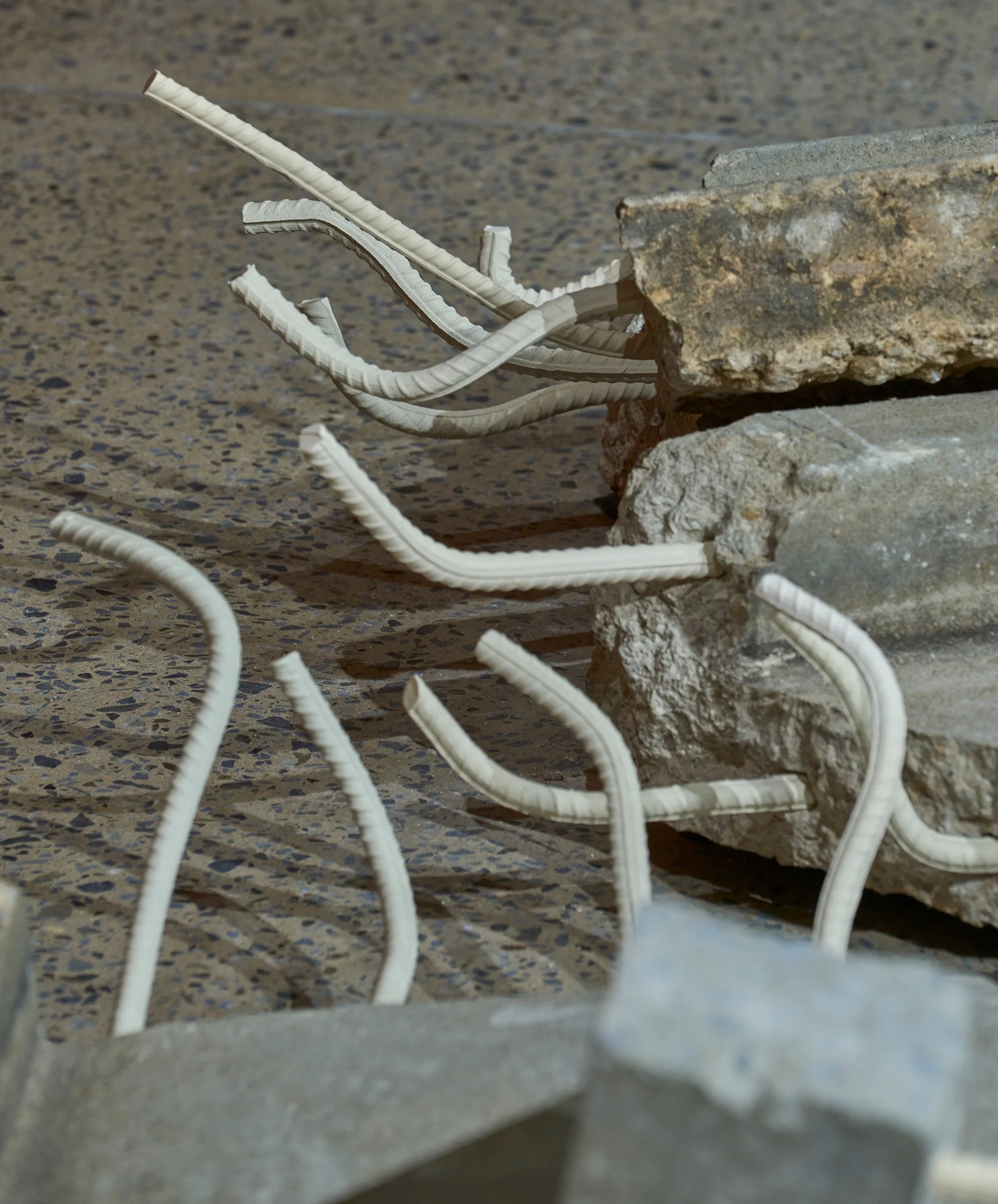
Ceramic, concrete
Chapter
summary
On 8 March 2004, the Philippines had much to celebrate. Its second female president, Gloria Macapagal Arroyo, was in power—significant given that, as of 2024…
Artist
statement
It was upon reading the work of Dr Vijeyarasa that I first became aware of the Philippine legislation that provides paid leave for victims of domestic violence…
Prof. Vijeyarasa's
reflections
Mark and I share a frustration that the Global South’s place in the world continues to reflect deep geopolitical biases. Too often the South is cast as secondary…
Chapter summary
Gender-Based Violence: Reclaiming the Global South’s Leadership on Workplace Leave for Victims
On 8 March 2004, the Philippines had much to celebrate. Its second female president, Gloria Macapagal Arroyo, was in power—significant given that, as of 2024, 113 countries had never had a female head of state or government. On International Women’s Day, Macapagal Arroyo signed the Anti‑Violence against Women and their Children Act, which included a provision granting victim‑survivors ten days of paid leave to pursue legal proceedings, relocate or access counselling and medical support. Yet when New Zealand adopted a similar entitlement in 2018, The Guardian reported it as a “world first”, later correcting the claim and acknowledging the Philippines’ earlier reform. A further eight Spanish-speaking jurisdictions that all provided some form of paid workplace leave for victim-survivors of gender-based violence, before New Zealand, go largely unrecognised. In what ways is this reticence to learn from other nations delaying law reform to the detriment of women? How do we hold Anglophone legislators to account for overlooking non‑English‑language legal systems when searching for good practice? What other good-practice law reform may remain buried under our geo-political biases?
Open Access: (Read online or download free)
Artist statement
It was upon reading the work of Dr Vijeyarasa that I first became aware of the Philippine legislation that provides paid leave for victims of domestic violence. I was impressed to learn my home country enacted this law in 2004, some 18 years before my adopted country of Australia followed suit. The fact that I was only just learning of it personally reinforced Dr Vijeyarasa's critique that global narratives promote the achievements of some countries over others. It is such narratives that frame the Global North as progressive and the Global South as forever catching-up, creating, as Dr Vijeyarasa argues, "cross-border barriers to sharing practice."
From this, I began to consider other barriers that may impede efforts to support gender equality. Reflecting on my experiences of the Philippines, I could think of very few people who, if needed, would be able to access this paid leave provision. There seemed to me a multitude of possible barriers to accessing protections, including systemic inequality, corruption, patriarchal norms, the gendered nature of informal employment, and a slow-moving justice system, to name a few.
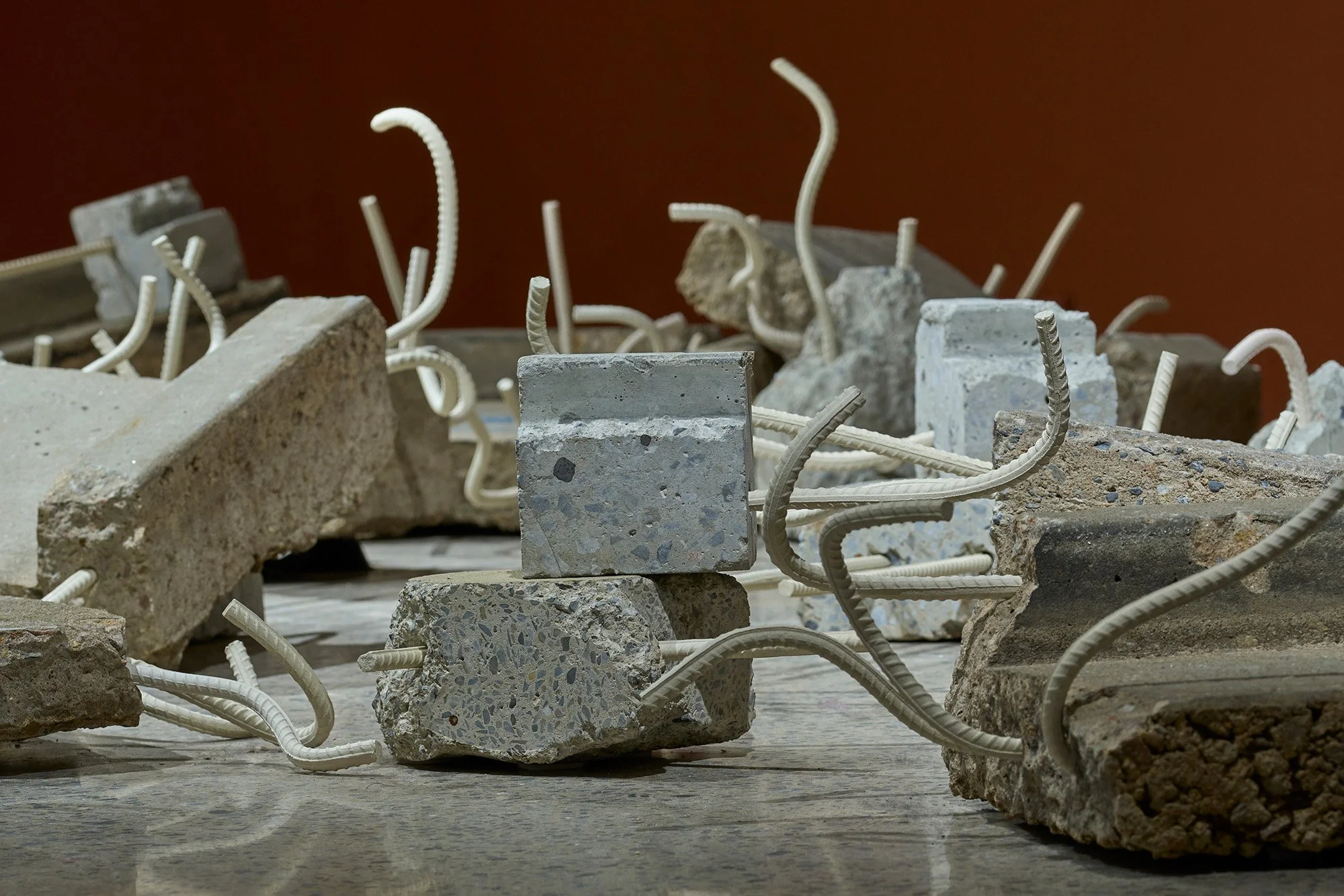
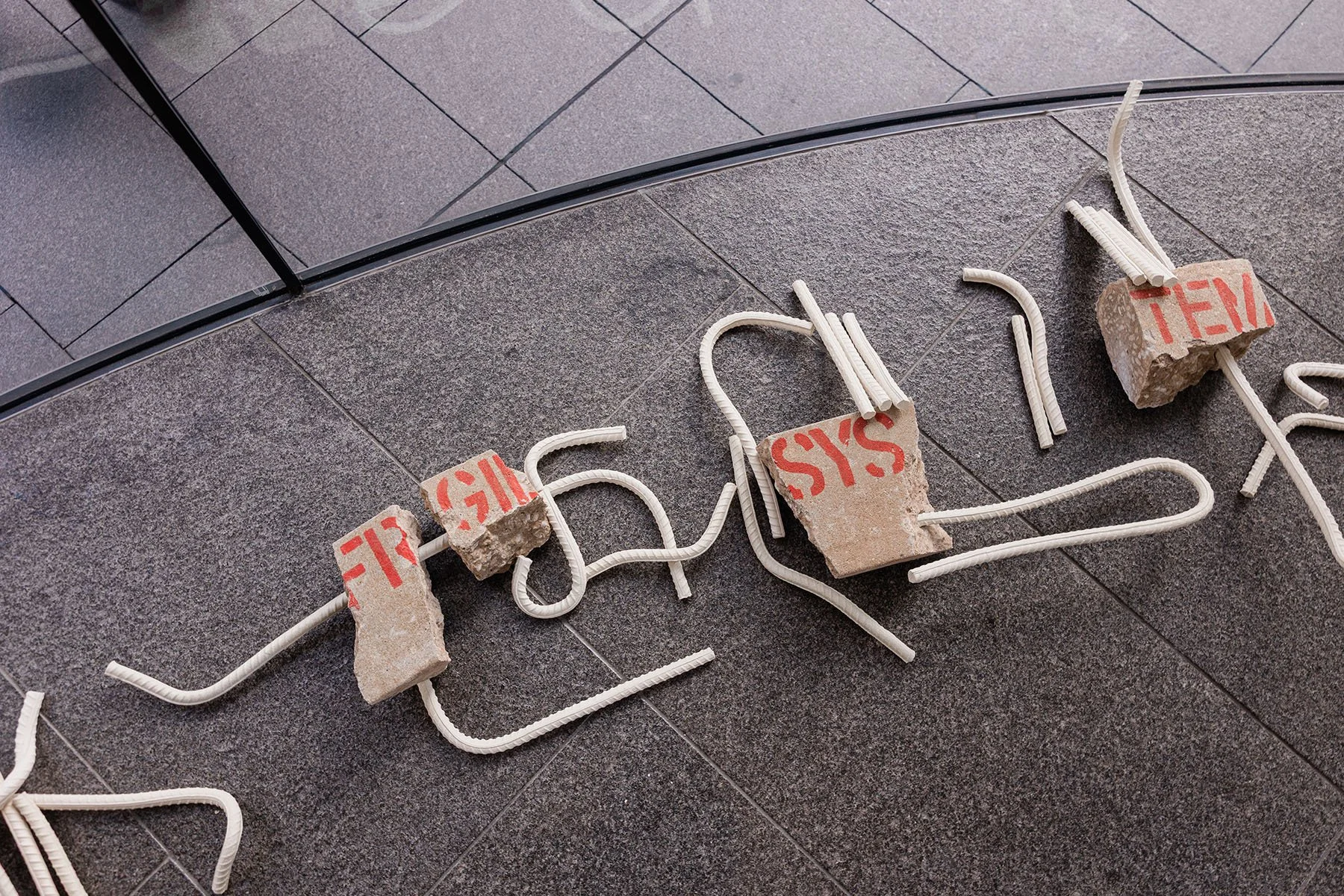
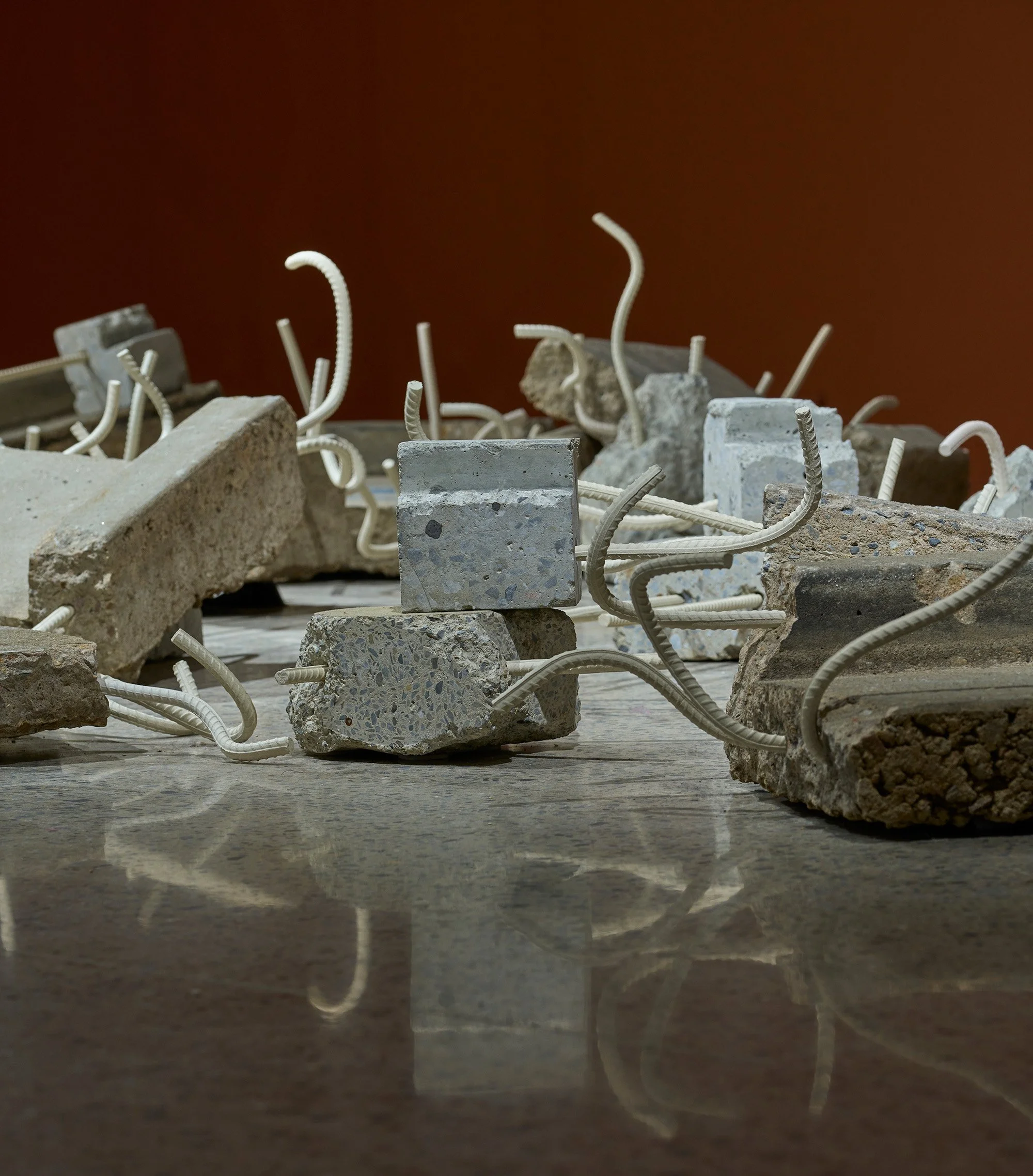
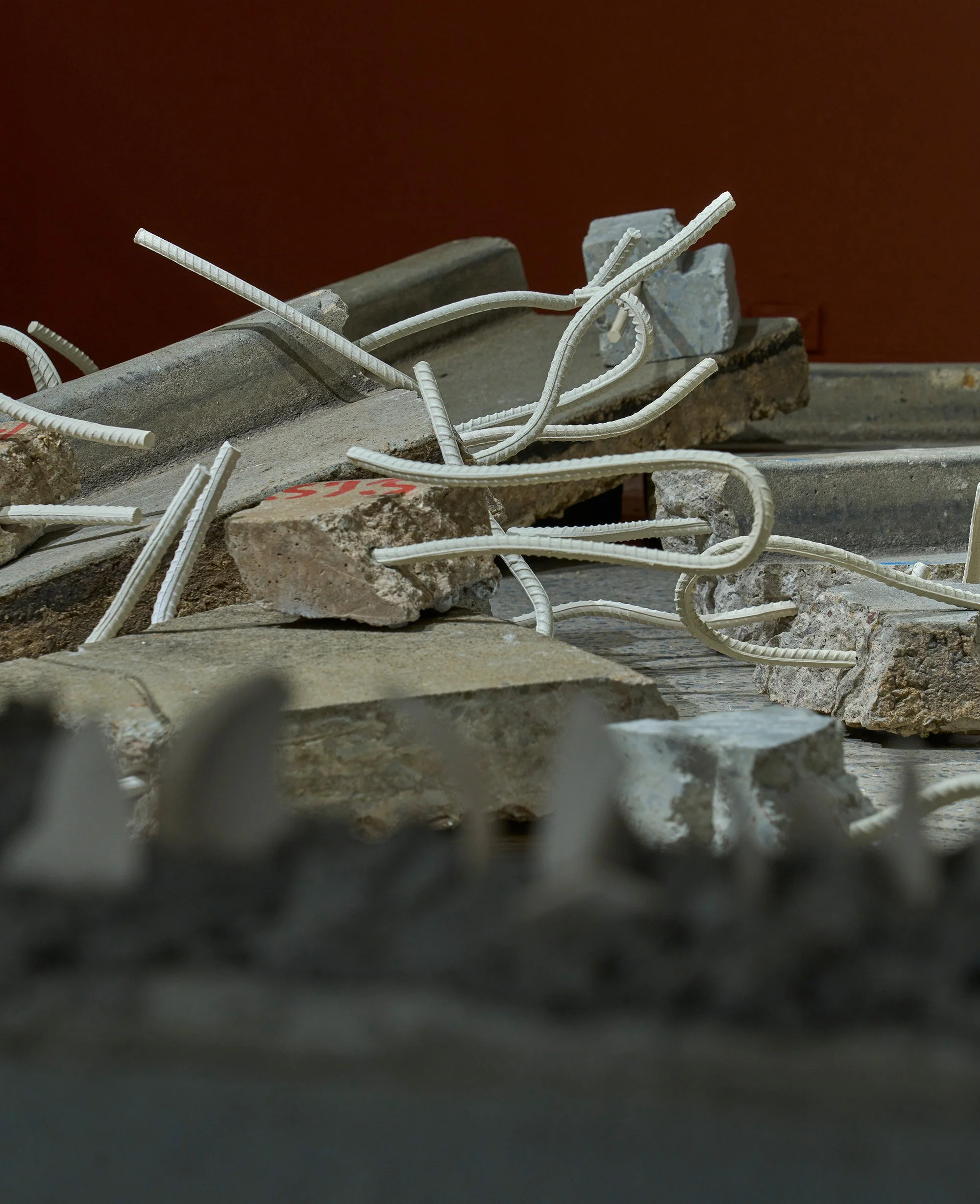
Upwards and Onwards presents a chaotic jumble of twisted ceramic rebars, emerging from concrete rubble. The work’s concrete foundation is solid if imperfect; while the ceramic rebars are meticulously made, in their fragile serpentine forms, they are entirely unfit for purpose. Through these contrasting materials and forms, Upwards and Onwards explores the systemic inequalities that undermine progressive change.
Prof. Vijeyarasa's reflections
Mark and I share a frustration that the Global South’s place in the world continues to reflect deep geopolitical biases. Too often the South is cast as secondary to the North, its potential leadership on gender equality overlooked. By highlighting the Philippines and countries across Latin America, this chapter—like Mark’s art—exposes how colonial power established, maintained and left behind the systemic inequalities still visible within and across nations. Mark’s work is large and insistent, echoing how gender‑based violence seeps between public and private realms and engulfs the everyday for victim‑survivors. Yet his work also reflects the contradictions of the Philippines’ position: the first country to legislate paid workplace leave for victims of violence, but still one where women struggle to enjoy rights. His juxtaposition of the cement’s solidity with the fragility of the rebars captures a central truth: countries like the Philippines can be both leading and lagging on gender equality.