Mona Forghani
Australian of Iranian origin
If it is broke, fix it (2025)
Canvas print of paper collage
Chapter
summary
Rewriting the Rules argues that although respect for women’s rights has advanced significantly over decades, law continues to underserve women…
Artist
statement
This collage was created in response to one of the central arguments in Prof Ramona Vijeyarasa’s book, Rewriting the Rules, that the legal system, despite its origins…
Prof. Vijeyarasa's
reflections
Mona is a powerful visual storyteller and it was wonderful watching this collage unfold. When we first met, we immediately recognised a kindred frustration with law’s…

Chapter summary
Gender and the Law: Why we need to rewrite the rules
Rewriting the Rules argues that although respect for women’s rights has advanced significantly over decades, law continues to underserve women. Despite women’s presence in legislatures, bureaucracies and drafting offices, legislation often fails to eliminate discrimination or reflect the lived realities of most women. Gender‑neutral drafting has not dismantled entrenched stereotypes and laws still inadequately represent women whose experiences differ by race, class, disability, sexuality, age and culture. The book calls for rewriting not only laws but the assumptions that shape them. The successes of scholars and activists who have demonstrated ways to improve the existing legal system—through feminist judgments and feminist legislation projects—show that the foundations for gender‑responsive law‑making already exist. The book asks what becomes possible when we deliberately expand our search for good practice, learning from less‑explored jurisdictions to better write women’s lives into law.
Open Access: (Read online or download free)
Artist statement
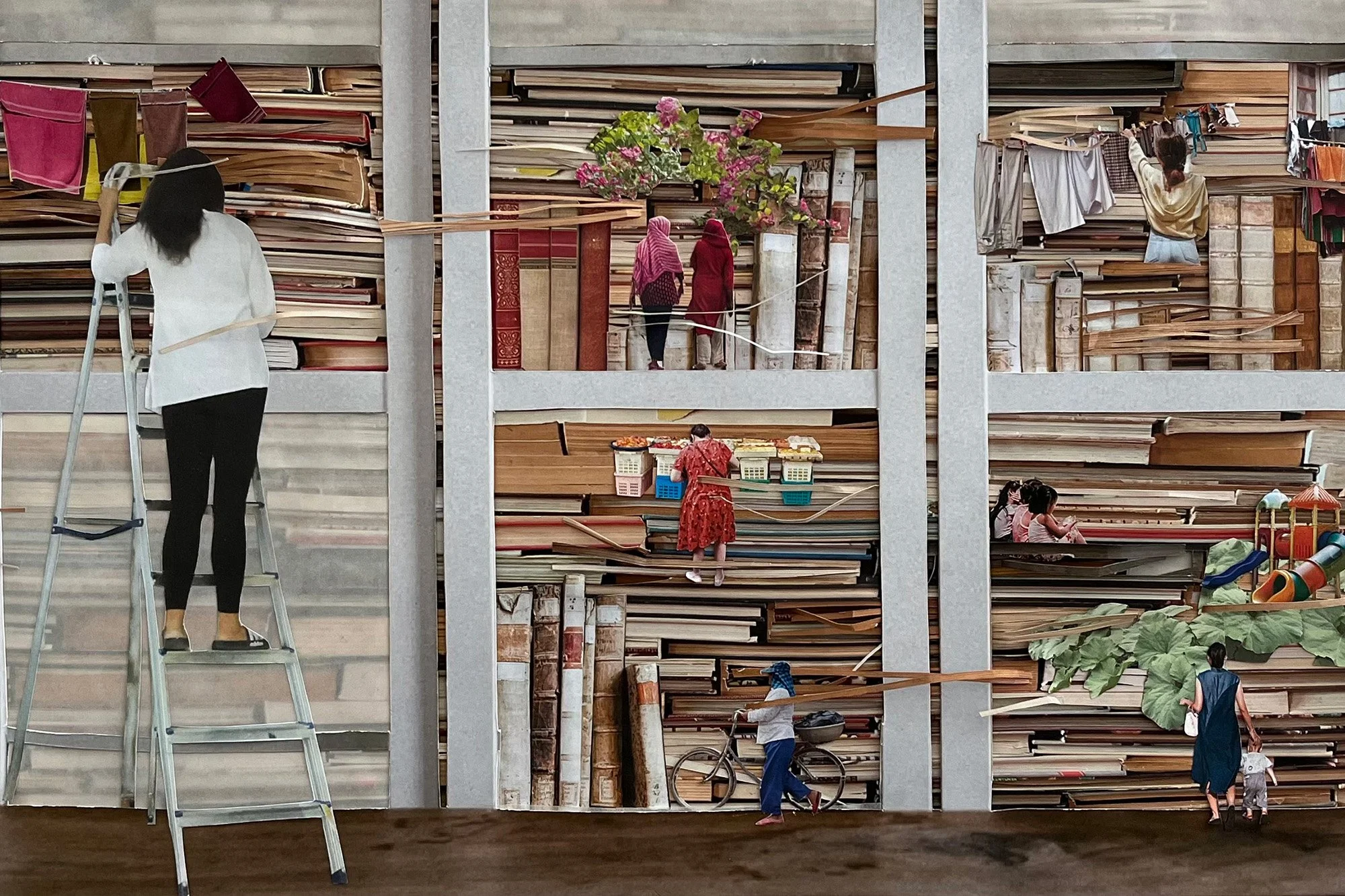
This collage was created in response to one of the central arguments in Prof Ramona Vijeyarasa’s book, Rewriting the Rules, that the legal system, despite its origins within structures built by and for men, still holds unrealised potential for advancing gender equality. Rather than abandoning the law as inherently incapable of serving women, Prof Vijeyarasa urges us to imagine how legislation might meaningfully change if it were rewritten to reflect the everyday experiences of women. My collage is an attempt to visualise this invitation—to look again at the legal system, not as a monolith, but as a structure capable of transformation from within.
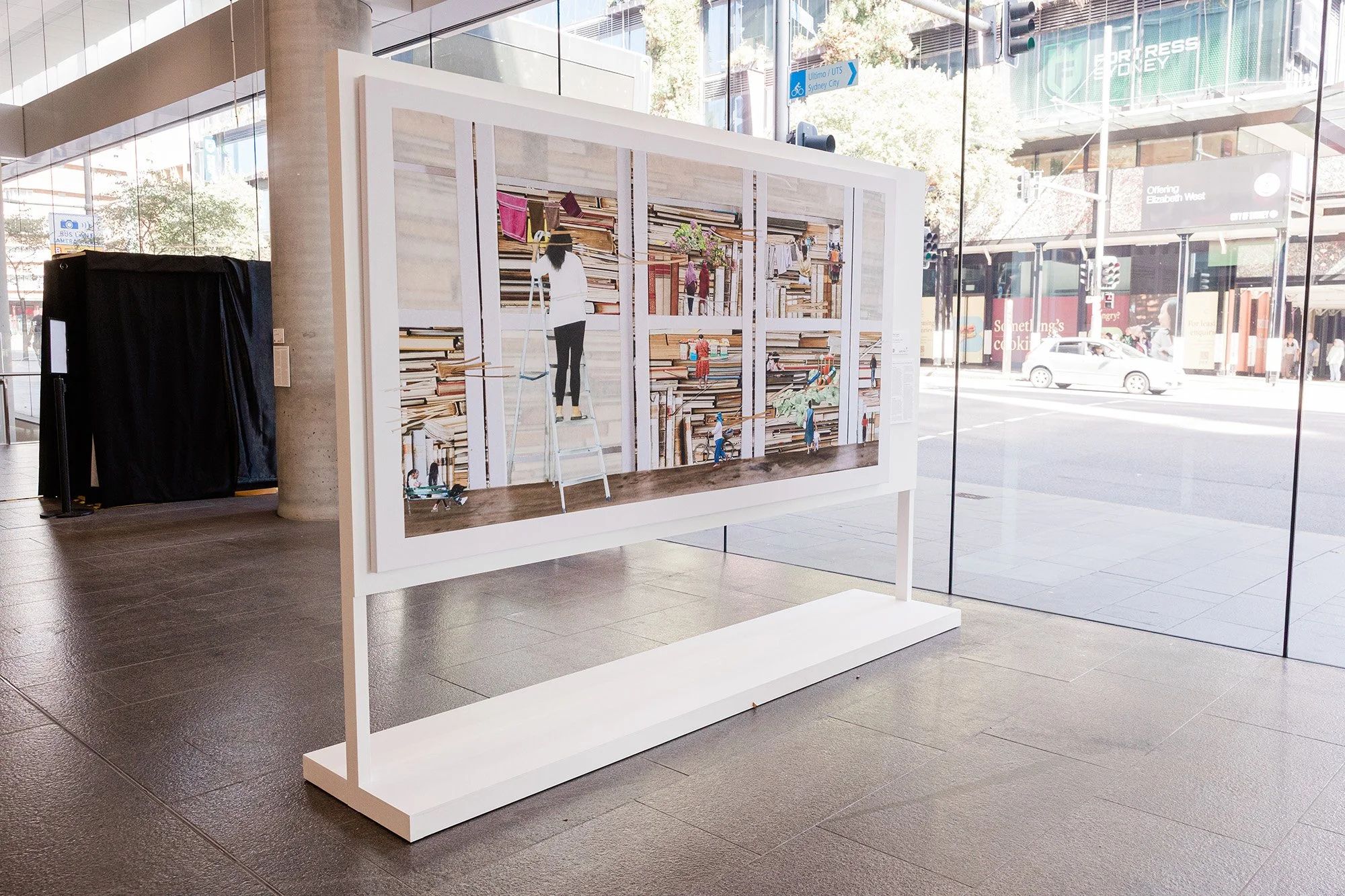
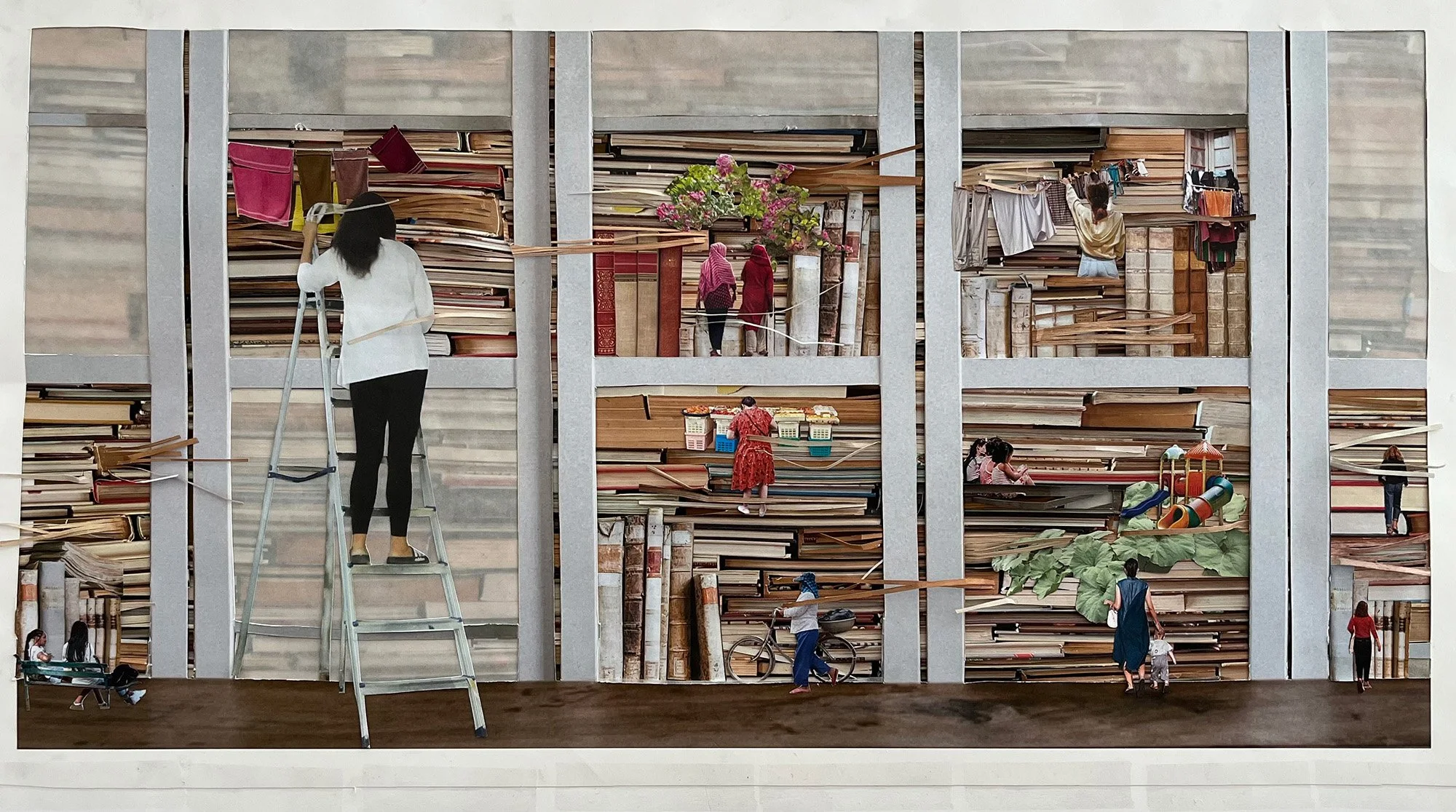
At the centre of the artwork stands a large glass cabinet filled with books, symbolising the current architecture of law. Some compartments remain fully intact, representing the aspects of the legal system that continue to operate as originally designed. In other areas, however, the glass has disappeared and the books themselves have begun to unravel, their pages shredded and spilling outward. These ruptures do not indicate the collapse of the system; instead, they signal an ongoing process of revision. By allowing the books to fray, the collage reflects Prof Vijeyarasa’s call for rewriting—not discarding—the rules. The exposed and reworked volumes reflect the labour required to craft legislation attentive to women’s lived realities.
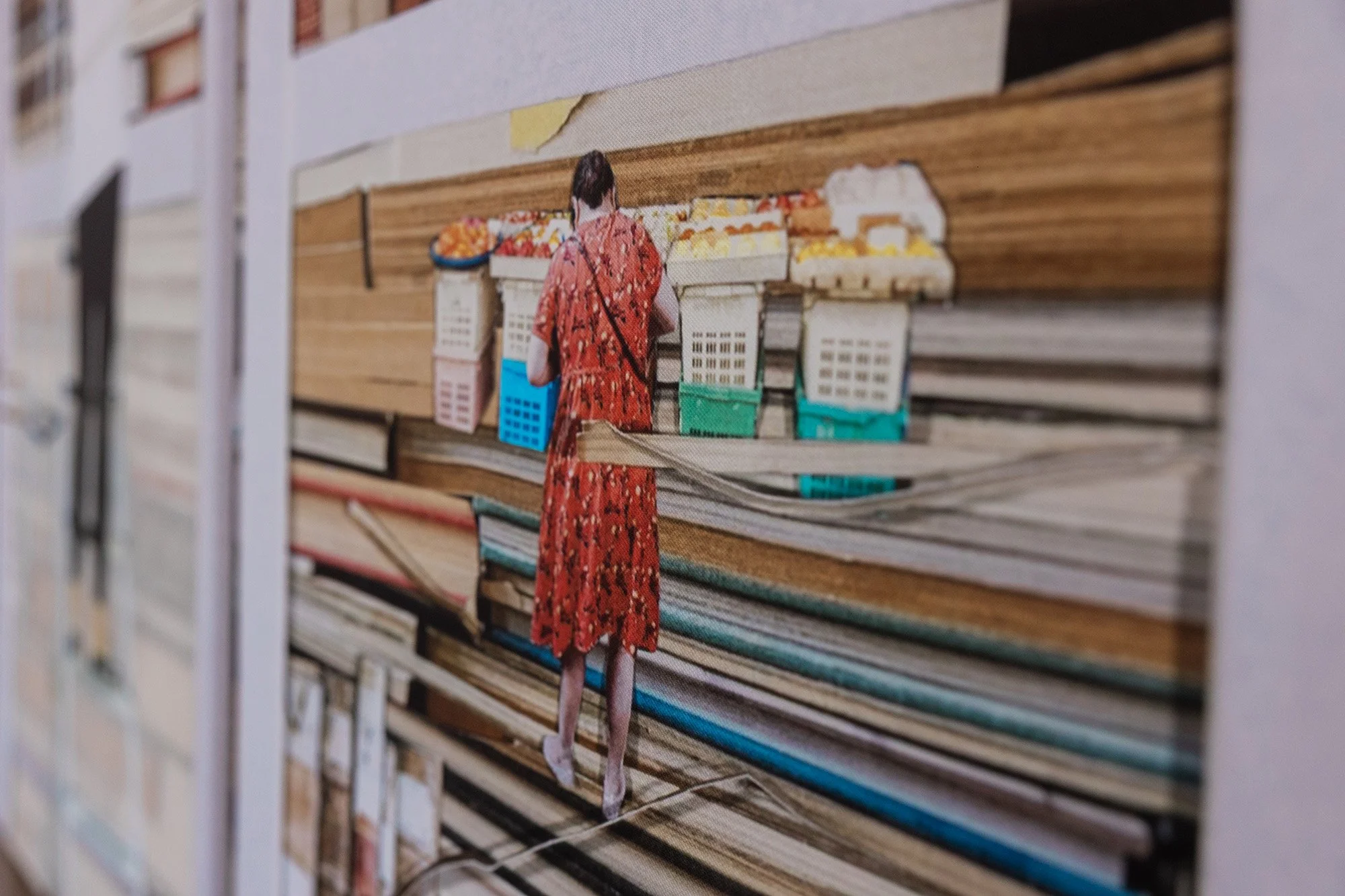
Emerging from among these unravelled books are images of women engaged in daily tasks: caring for children, doing laundry, preparing food, grocery shopping. These scenes, positioned both within and around the cabinet, challenge the traditional division between the public and private spheres that has long shaped legal thinking. The law has historically focused on regulating public life—employment, education, political participation—while often neglecting the domestic and familial spaces where many gendered inequities originate and persist. By inserting these intimate, routine moments into the very structure that represents law, the collage underscores the necessity of bringing women’s private-sphere experiences into legislative consideration.
The women portrayed in the collage are intentionally drawn largely from the Global South. This choice responds to Prof Vijeyarasa’s critique of Western assumptions that countries outside the West are inherently or uniformly gender-unequal. Her work highlights examples in which legal innovations in the Global South have advanced gender equality in ways often overlooked or undervalued by Western scholarship. Including these women re-centres their experiences and contributions, suggesting that meaningful legal reform must be globally informed rather than unilaterally dictated from the West.
At the forefront of the collage stands a woman on a ladder, reaching into the transformed cabinet. She functions as the central protagonist, embodying the idea that women must be active participants in ‘rewriting the rules’ rather than merely subjects governed by them. Her upward movement gestures toward both aspiration and agency: the rewriting of law cannot occur without the voices and insights of women whose everyday realities the law seeks to address.
Together, these elements weave a visual reflection of Prof Vijeyarasa’s thesis—that the law, when reshaped through women’s experiences, can become a more just and inclusive tool for gender equality.
Prof. Vijeyarasa's reflections
Mona is a powerful visual storyteller and it was wonderful watching this collage unfold. When we first met, we immediately recognised a kindred frustration with law’s limitations. We debated how far the canvas should reveal the dismantling of law itself: whether heavy, ominous and inaccessible law books should appear tumbling down or torn apart. Yet we also connected as believers in law’s transformative potential, including its capacity to improve the lives of women from diverse cultural backgrounds.
Her canvas captures with striking clarity how law forms a rigid foothold in our societies and how women’s lives are too often an ‘add-on’ or pasted over existing legislation. Mona wanted to ensure that women’s unpaid and undervalued care work appears across her collage, a reality that the legal system routinely overlooks. Mona’s work represents women from different communities while celebrating the joyful truth that women rarely stand alone in society. Her canvas holds both critique and hope—showing not only the weight of the legal structures that shape women’s lives, but also the collective strength when women stand in solidarity with each other to push those structures towards change.