Barbara Doran
Australian
Come Into My World (2026)
Photography / miniatures
Chapter
summary
In 1997, four Aymara women in Bolivia went on hunger strike to protest injustices in the mining sector, reminding us that women have long been central…
Artist
statement
This body of work responds to the chapter Extractives: Regulating at the Margins to Formalize Artisanal and Small-Scale Mining for Women through a series of photographic.…
Prof. Vijeyarasa's
reflections
Barbara’s work is well known across UTS. I was immediately struck by the ease with which she moves between her academic and artistic worlds, each informing the other…
Chapter summary
Extractives: Regulating at the Margins to Formalize Artisanal and Small-Scale Mining for Women
In 1997, four Aymara women in Bolivia went on hunger strike to protest injustices in the mining sector, reminding us that women have long been central to mining. Across Africa, Asia and Latin America, millions of women work in artisanal and small-scale mining (ASM), often labelled “illegal”, using handheld tools, small equipment and local water sources to shovel, pan mud and grind rocks left by large‑scale mining. ASM is tied to globalisation, rural stagnation, poverty and survival. Control over natural resources means control over lives. Formalisation, designed to legalise and monitor ASM, often excludes women. In countries like Peru, pallaqueras (female manual miners) remain outside formalisation, and in Ghana, Mozambique and Tanzania, men dominate leadership despite reforms. Gender‑blind laws miss women’s realities: gendered violence, lower pay, cultural taboos, lack of childcare and heightened exposure to toxins alongside greater care responsibilities. A gender‑responsive approach requires consulting women miners and designing reform to enable fully and equal access to training and credit, childcare and sanitation at mine sites and real accountability for sexual violence, ultimately making visible the economic contributions of women in ASM.
Open Access: (Read online or download free)
Artist statement
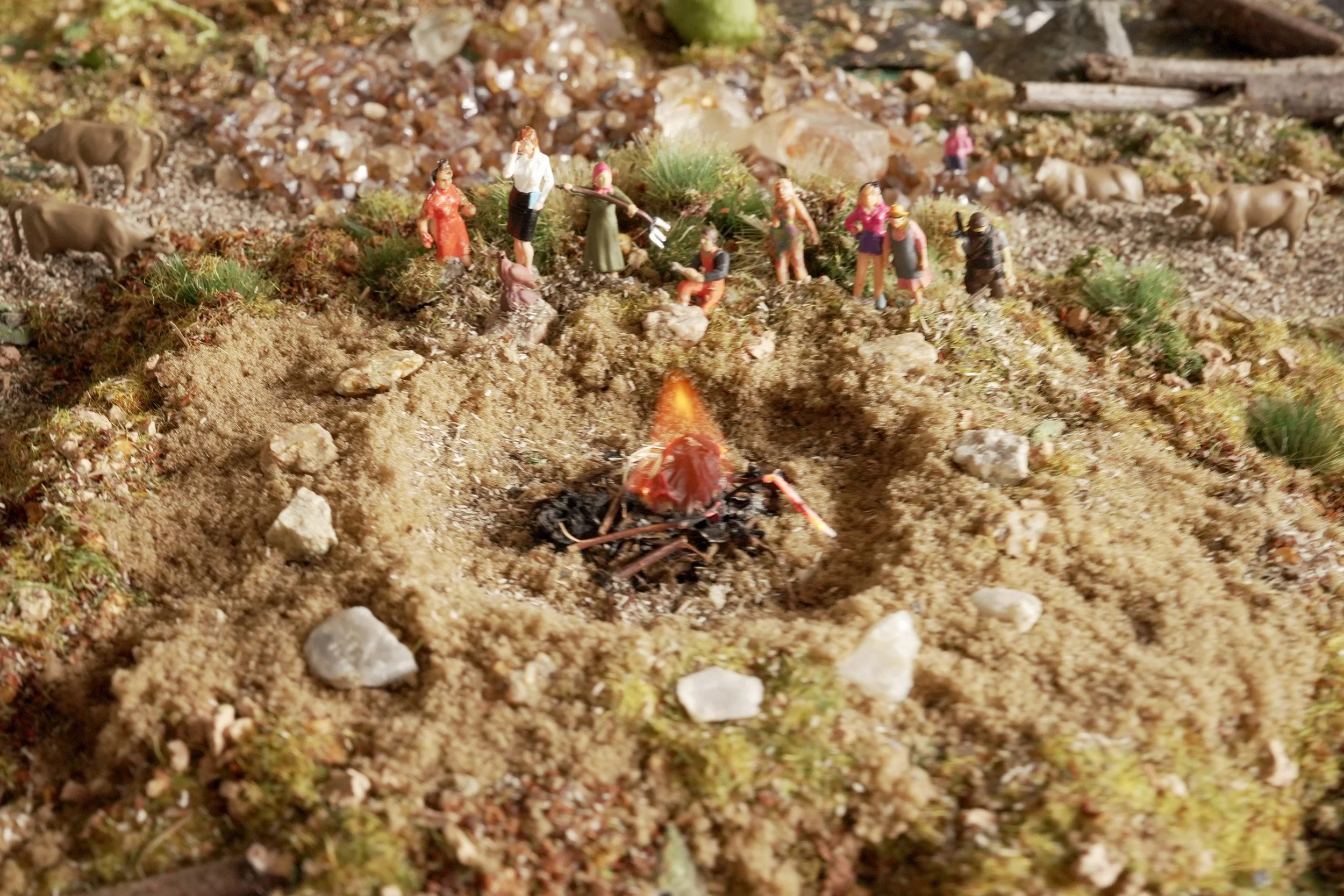
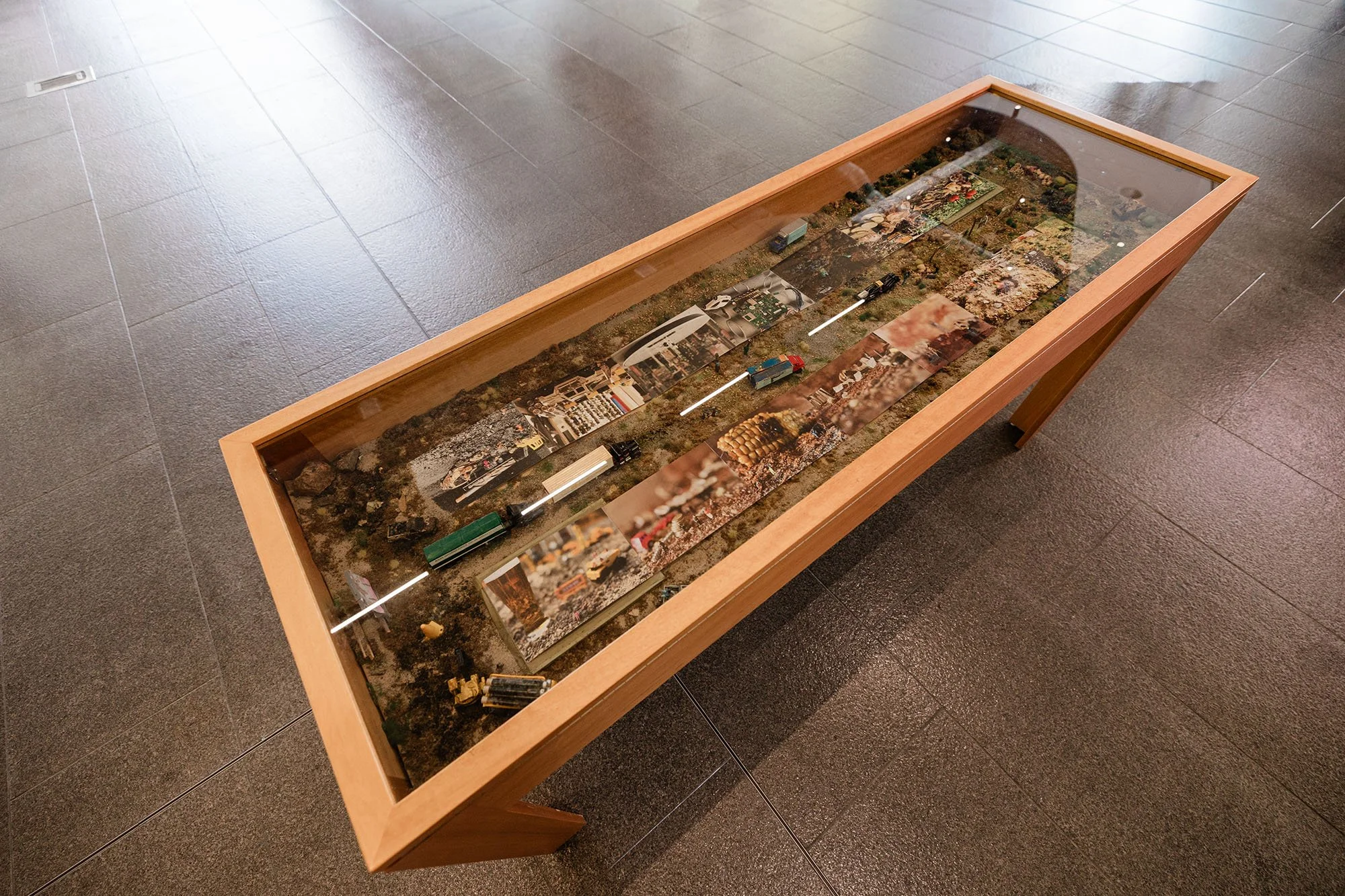
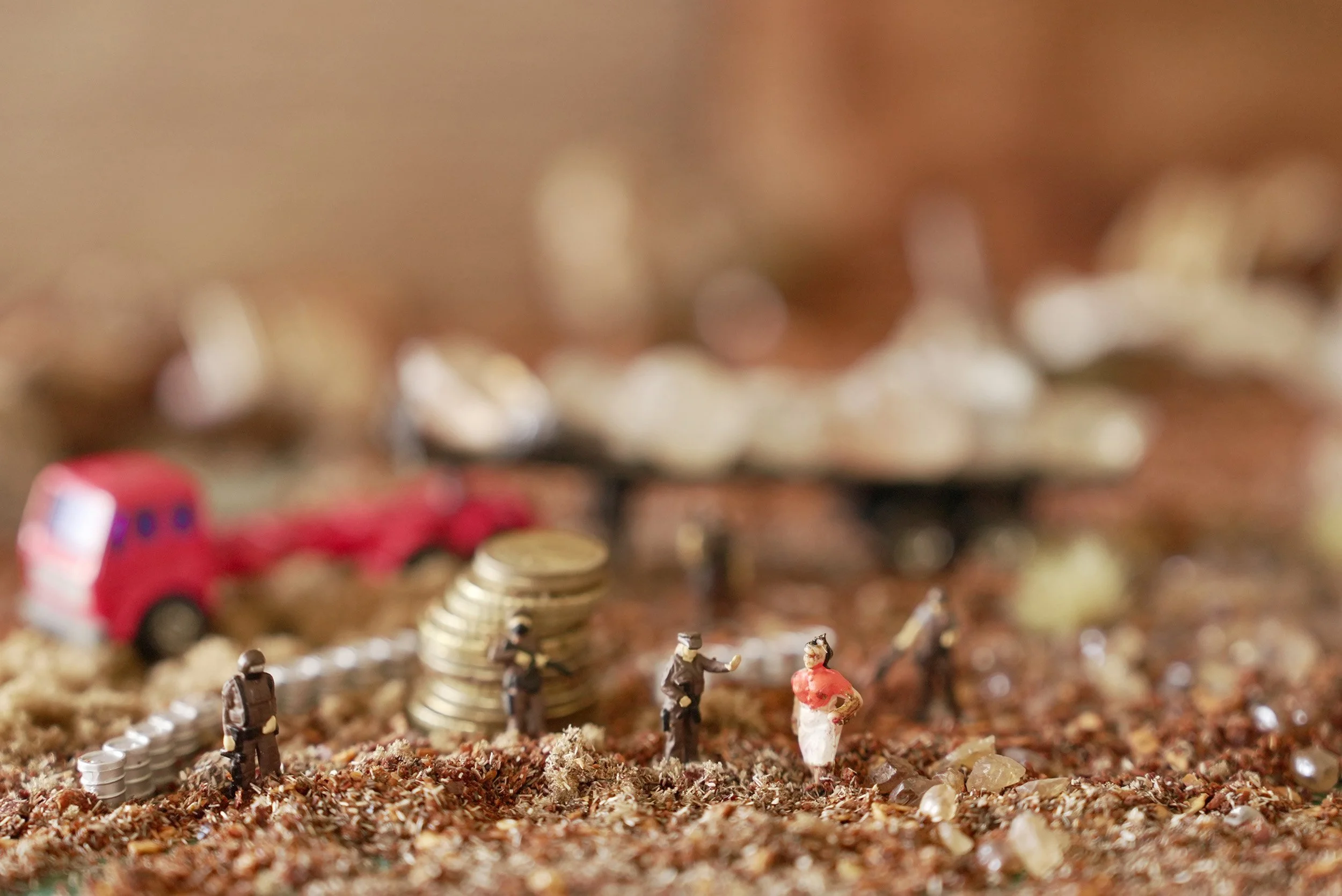
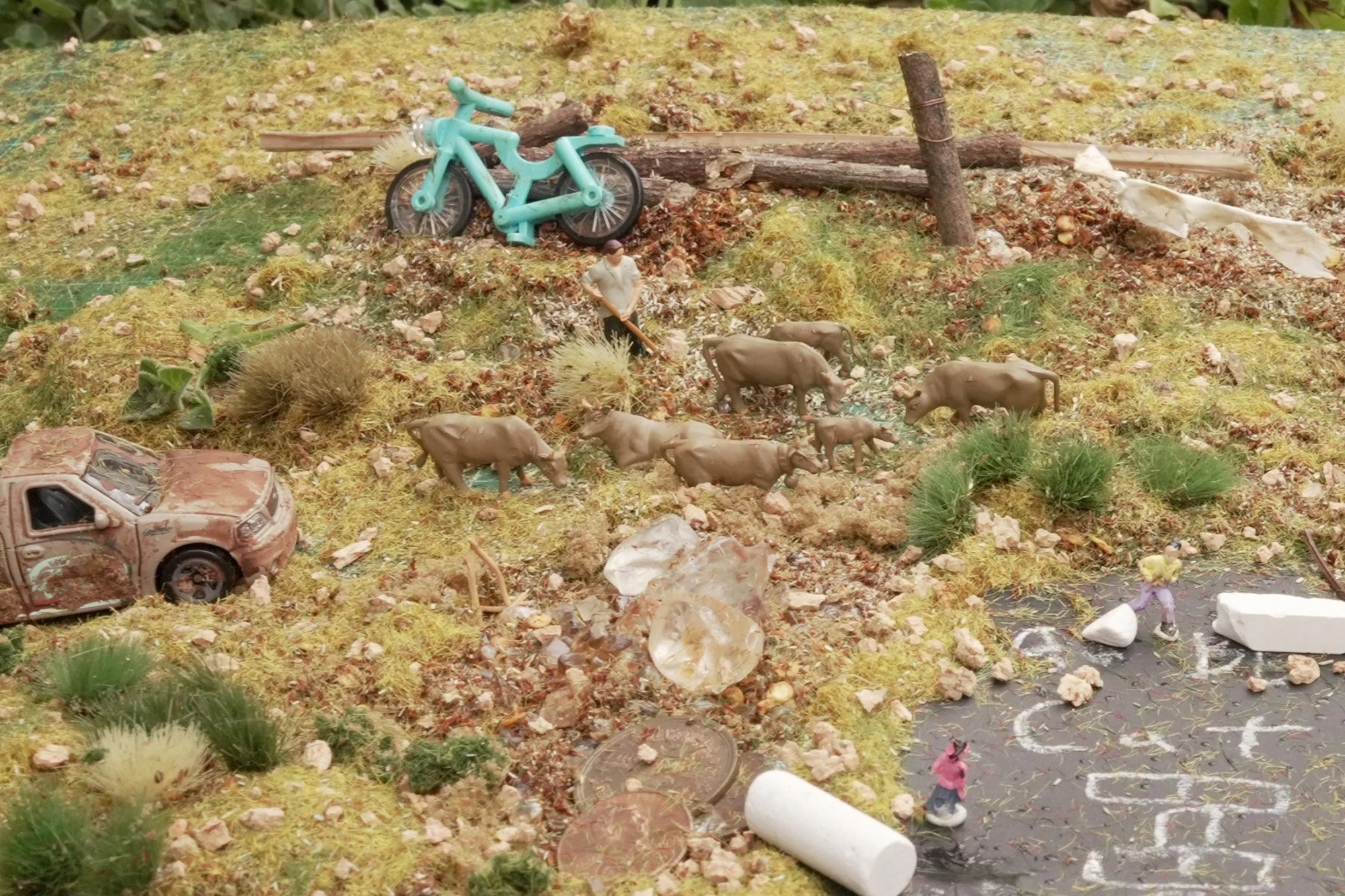
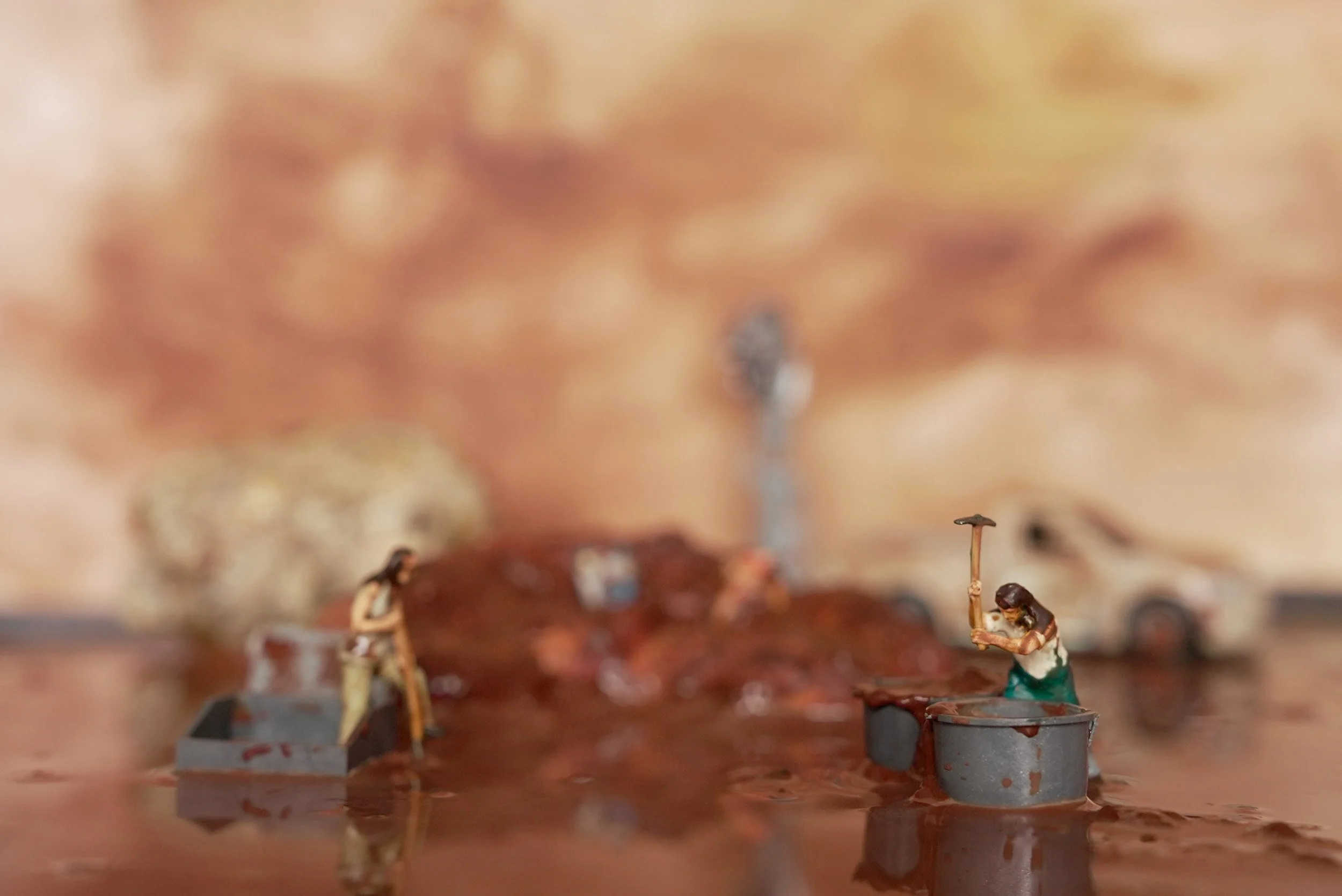
This body of work responds to the chapter Extractives: Regulating at the Margins to Formalize Artisanal and Small-Scale Mining for Women through a series of photographic images that operate as miniature worlds. The work brings into focus the complex realities of women’s lives within artisanal mining contexts, where domestic labour, education, market trading, agriculture and extraction are intertwined. Mining can offer greater income than agriculture, yet control over high-value minerals and regulation remains uneven and frequently male-dominated, leaving women’s substantial contributions to global raw material supply chains largely unseen, even as the minerals they extract underpin digital technologies, energy systems and aesthetic economies. These works translate small, carefully composed assemblages into photographic form, inviting concentrated visual encounters.
I work with miniatures because they slow us down. Photography becomes the means through which that slowness is distilled. A photographic image allows the miniature to exist in a suspended state. Through zooming in, cropping and curated editing, the work draws attention to small details, textures and spatial relationships that might otherwise go unnoticed. What is offered are incomplete narratives, held in suspension. Miniatures have long invited intimacy. To look at something small is to lean in, to enter a space of close attention where time loosens and perception accesses finely woven webs of connection. Philosopher Gaston Bachelard describes the miniature as a site where imagination gathers intensity rather than diminishes, where vast emotional and symbolic worlds can be held within a condensed form.
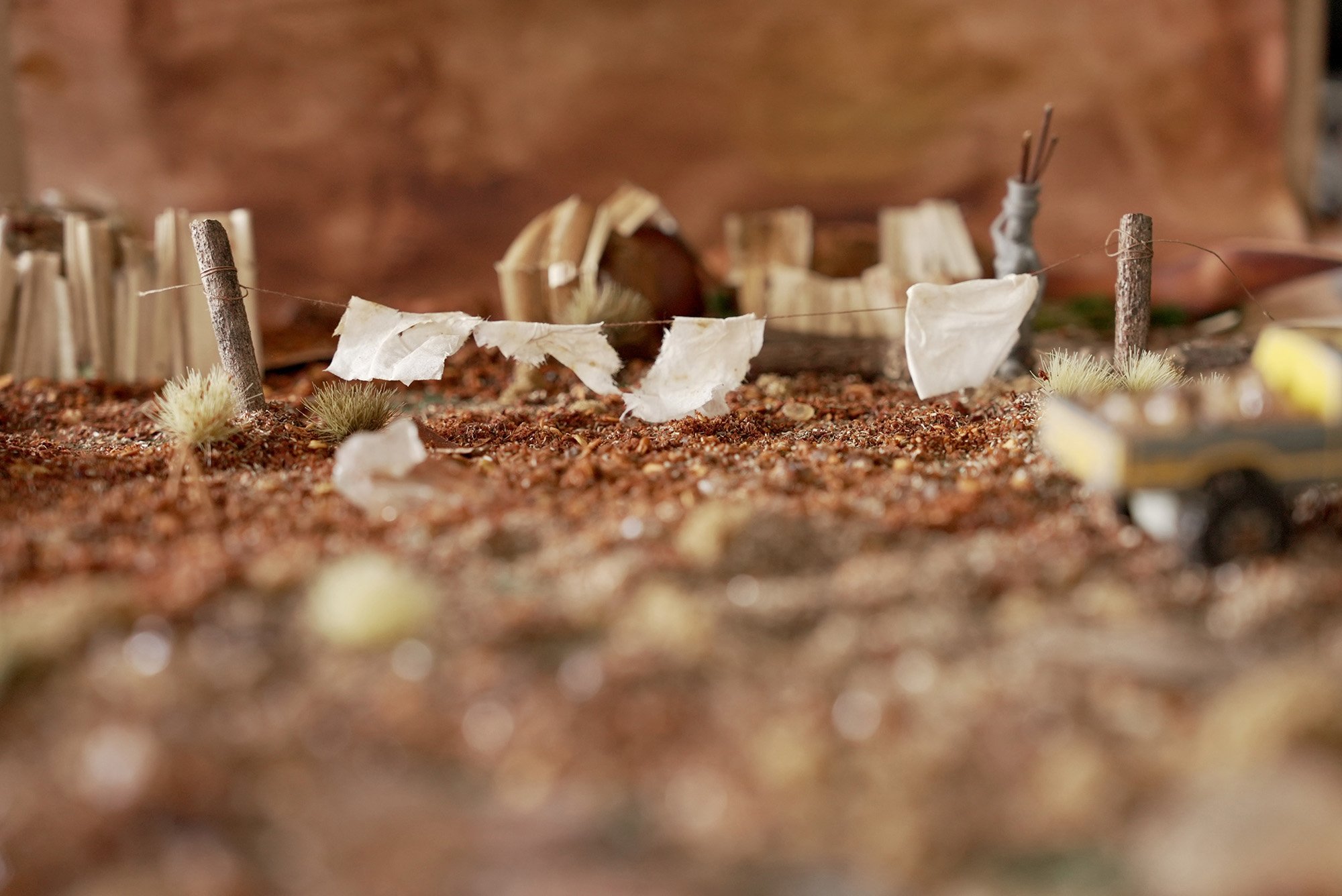
These images sit between the real world and story. They echo the visual language of illustration, dioramas and remembered scenes from childhood books or models. The materials and fragments within the frame are recognisable, yet their scale and arrangement resist certainty. Through considered framing, some elements are emphasised while others remain partial or obscured. Meaning is suggested rather than resolved.
The material language of the work draws from everyday substances and objects. Foodstuffs echo soil, dust and rock; pigments and powders recall mineral traces; tips of herbs and seeds stand in for cultivated land. Materials associated with childhood, such as LEGO, die-cast vehicles, and dollhouse furnishings, sit alongside fragments drawn from the world of infrastructure: plumbing fittings, tools and circuit boards. These elements operate as metaphors for industrial and extractive systems.
While the imagery was catalysed by the worlds of women articulated in the chapter, the work was also shaped by visual research across diverse sites. Narratives of artisan labour echoed landscapes and social worlds that shaped my early life in Southern Africa, environments marked by manual labour, mining, extraction and trade. Women played a central role in sustaining households and communities through physical work, negotiation and everyday acts of care. What I carry from these experiences is not a single story, but a lived sense of paradox shaped by agency, survival, and creativity.
The photographic miniature allows these tensions to coexist. By isolating fragments of landscape, domestic objects, or constructed scenes, the work brings the mundane into focus. What might normally remain backgrounded, such as manual labour, care work, and material residue, is drawn into view. Photography here functions to draw out small, resonant moments from larger systems often blurred at scale.
In contrast to structures that dominate land, time, and bodies, these miniatures insist on human-scale perception. They do not confront power directly; instead, they re-scale attention, offering a counterpoint grounded in intimacy and care. Ultimately, these works function as invitation to make the world feelable again. In viewing the images, the invitation is to enter a shared space of reflection, where meaning emerges through proximity, memory and imagination.
Prof. Vijeyarasa's reflections
Barbara’s work is well known across UTS. I was immediately struck by the ease with which she moves between her academic and artistic worlds, each informing the other. The challenges Barbara faced in sourcing the types of figurines for this work that might best reflect women in artisanal and small‑scale mining – culturally diverse, female and not in black suits! – tells a bigger story about who is and who is not represented in our world. Forty‑eight per cent of women gold pickers in Peru (pallaqueras) are organised into Indigenous women’s associations such as Sleeping Beauty (Bella Durmiente). Inspired by their namesake, Barbara’s choice to tell their story through a concertina book captures the strength of women‑led and women‑only associations. The turning pages evoke the layered, multidimensional lives of these women who are workers, and often mothers and wives. The photos capture both their resilience and the contradictions of formalisation, a process that may offer protection yet still falls short of meeting their needs.